
Vasily Ilin
Palo Alto, California
About Me
I work at Axiom Math in Palo Alto, California, on large-scale autoformalization of mathematics. I build tools and AI workflows that turn research mathematics into machine-checked proofs in Lean, and make mathematical knowledge easier to find and reuse.
I completed my Ph.D. at the University of Washington, working with Jingwei Hu and Jarod Alper. I am a founding director of the UW Math AI Lab, where my work includes TheoremSearch and TheoremGraph. I also maintain Lean Pool, an AI-maintained archive of formalized mathematics.
I grew up in Russia and moved to Boston in 2015. I studied mathematics as an undergraduate and earned a Master’s in computer science before moving to Seattle for my Ph.D. My earlier research focused on scientific machine learning, score-based methods, and plasma simulation.
Research Interests
- Large-scale autoformalization: use AI agents to formalize research mathematics in Lean and grow reusable libraries of verified results.
- Mathematical knowledge infrastructure: connect formal and informal mathematics through semantic search, theorem dependency graphs, and retrieval for theorem-proving agents.
- AI-assisted mathematical research: combine mathematical reasoning and formal verification to develop and check new results.
News
- [Oct. 2026] Posted “Ternary polynomial relations and periods of cusp forms”, joint work with Ken Ono, with the main results formalized in Lean by AxiomProver.
- [Sep. 2026] “It Compiles. Now What? Assessing Research-Level Autoformalization Beyond Correctness” accepted as a poster at the NeurIPS 2026 VeriCodeGen workshop.
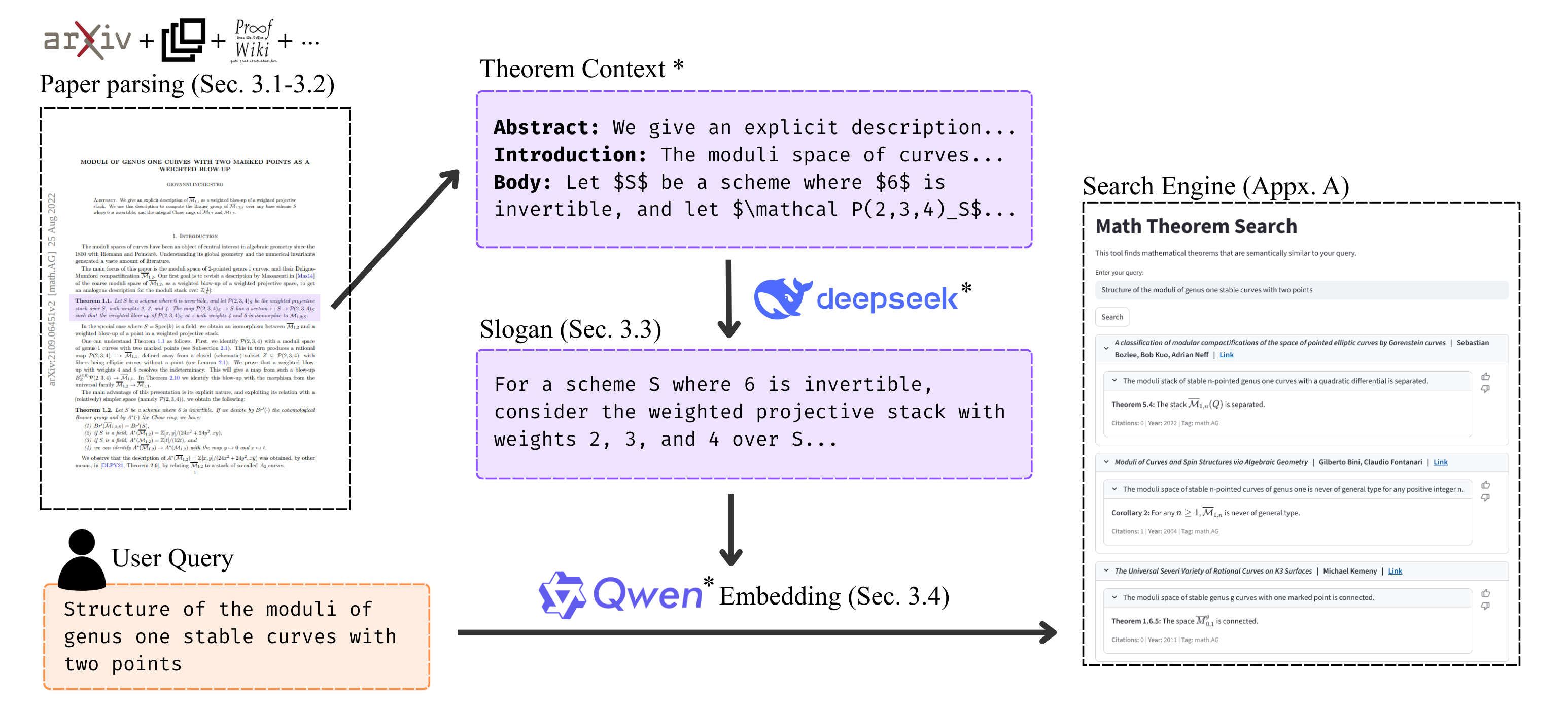
- [Sep. 2026] TheoremSearch accepted to the NeurIPS 2026 Evaluations & Datasets Track.
- [Sep. 2026] Posted “Lean Pool: An AI-Maintained Archive of Formalized Mathematics” on arXiv.
- [Jun. 2026] Posted “TheoremGraph: Bridging Formal and Informal Mathematics” on arXiv.
- [Jun. 2026] Defended my Ph.D. at the University of Washington.
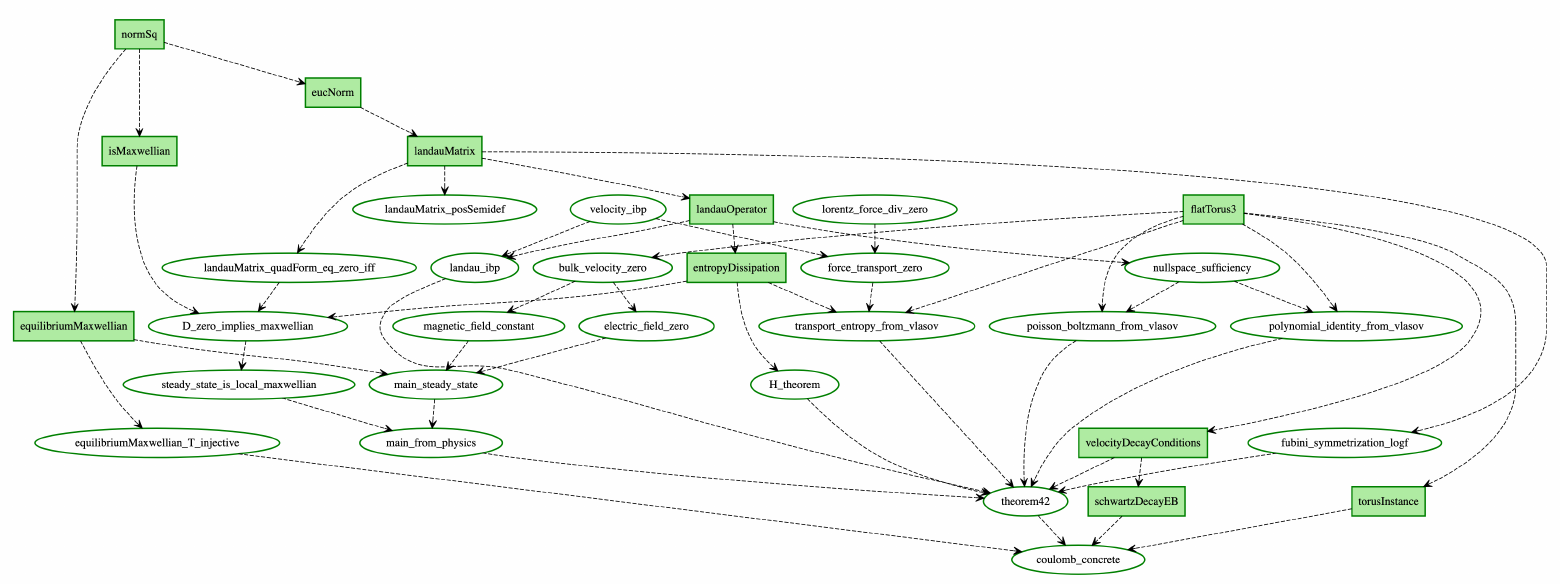
- [May 2026] Presented “Semi-Autonomous Formalization of the Vlasov-Maxwell-Landau Equilibrium” at AI, Proof and Verification (AIPV), a workshop colocated with FM 2026 in Tokyo, on May 19.
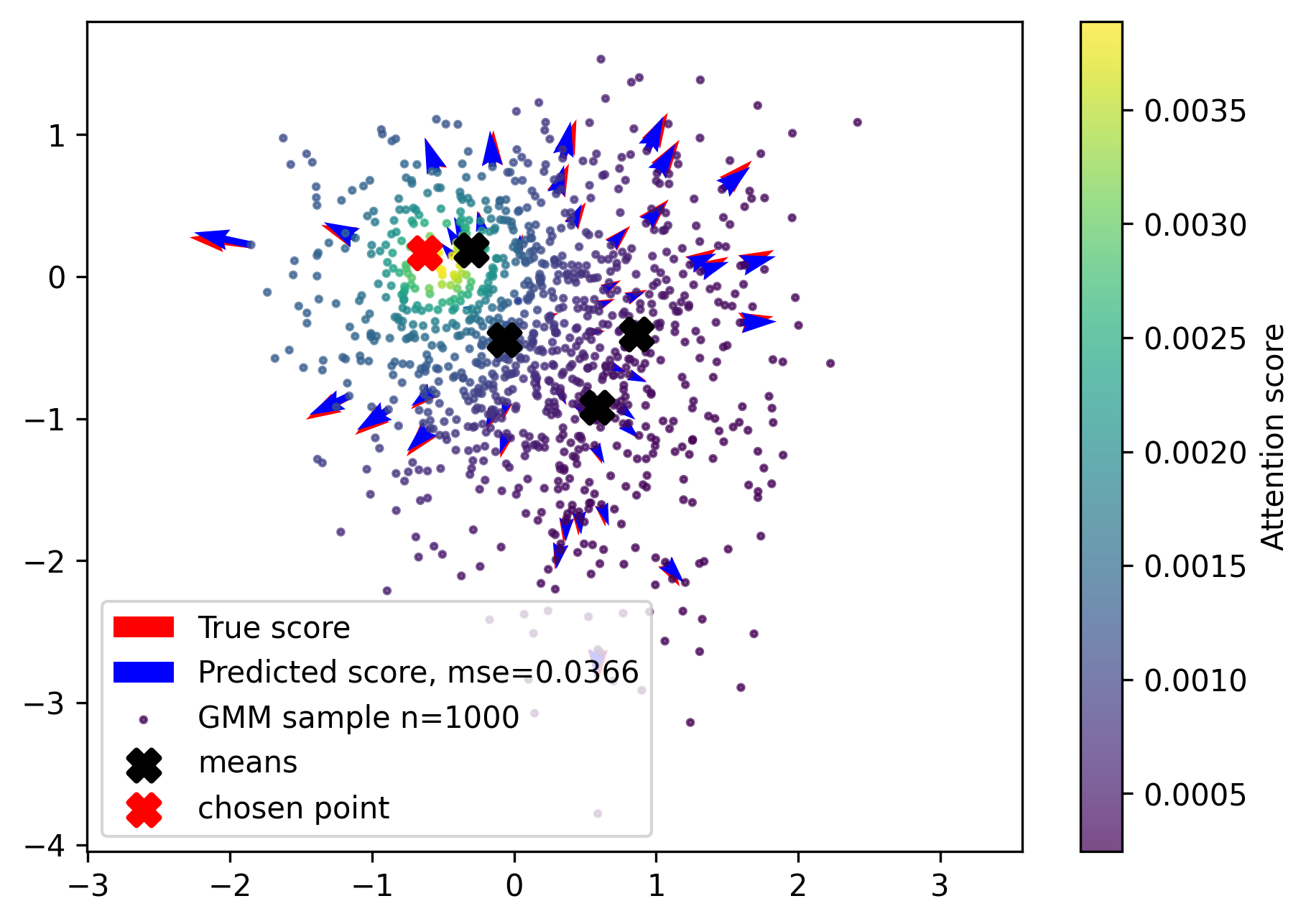
- [May 2026] DiScoFormer selected for an oral presentation at ICML 2026.
- [May 2026] “Score-Based Deterministic Density Sampling” published in Communications on Pure and Applied Analysis (CPAA).
- [Mar. 2026] Four papers from the UW Math AI Lab accepted to ICLR 2026 workshops: Theorem Search, Lean Proof Repair, DiScoFormer, and A Neural Score-Based Method for Deterministic Collisional Plasma Simulation.
- [Mar. 2026] Posted “Semi-Autonomous Formalization of the Vlasov-Maxwell-Landau Equilibrium” on arXiv.
- [Feb. 2026] Posted “Semantic Search over 9 Million Mathematical Theorems” on arXiv.
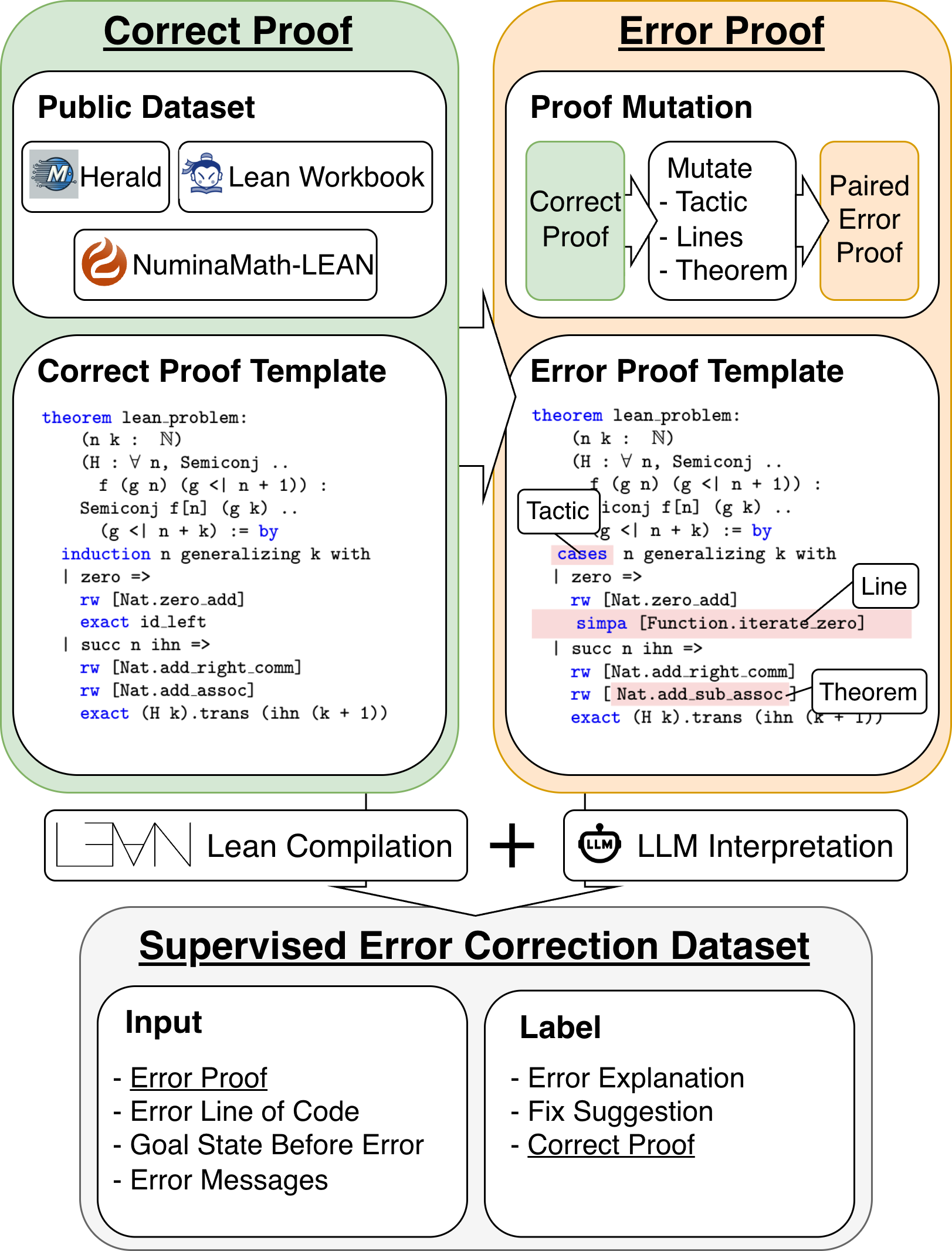
- [Feb. 2026] Posted “Learning to Repair Lean Proofs from Compiler Feedback” on arXiv.
- [Feb. 2026] Updated DiScoFormer paper: “DiScoFormer: Plug-In Density and Score Estimation with Transformers” (v2).
- [Oct. 2025] Posted “Stability of the spatially homogeneous Landau equation in relative entropy and applications to score-based numerical methods” on arXiv.
- [Sep. 2025] Finished my fourth internship at Google, using LLMs to turn slides into videos.
- [Apr. 2025] Presented poster “Score-Based Deterministic Density Sampling” at ICLR 2025.
- [Mar. 2025] Presented poster “Transport-based particle methods for the Fokker-Planck-Landau equation” at the Kinetic Fluid Workshop in UW-Madison.
- [Feb. 2025] RealEdit paper accepted in CVPR, Landau paper accepted in the CMS journal.
- [Jan. 2025] Gave two talks at JMM 2025 on sampling and Lean.
- [Nov. 2024] Submitted a paper on image editing with diffusion models to CVPR 2025.
- [Sep. 2024] Finished my third internship at Google, working on detection of defective TPUs using machine learning.
- [Jun. 2024] Participated in the SLMath summer school on interacting particle systems.
- [May 2024] Released pre-print “Transport based particle methods for the Fokker-Planck-Landau equation”.
- [Feb. 2024] Passed my general exam.
Publications
-
 VeriCodeGen
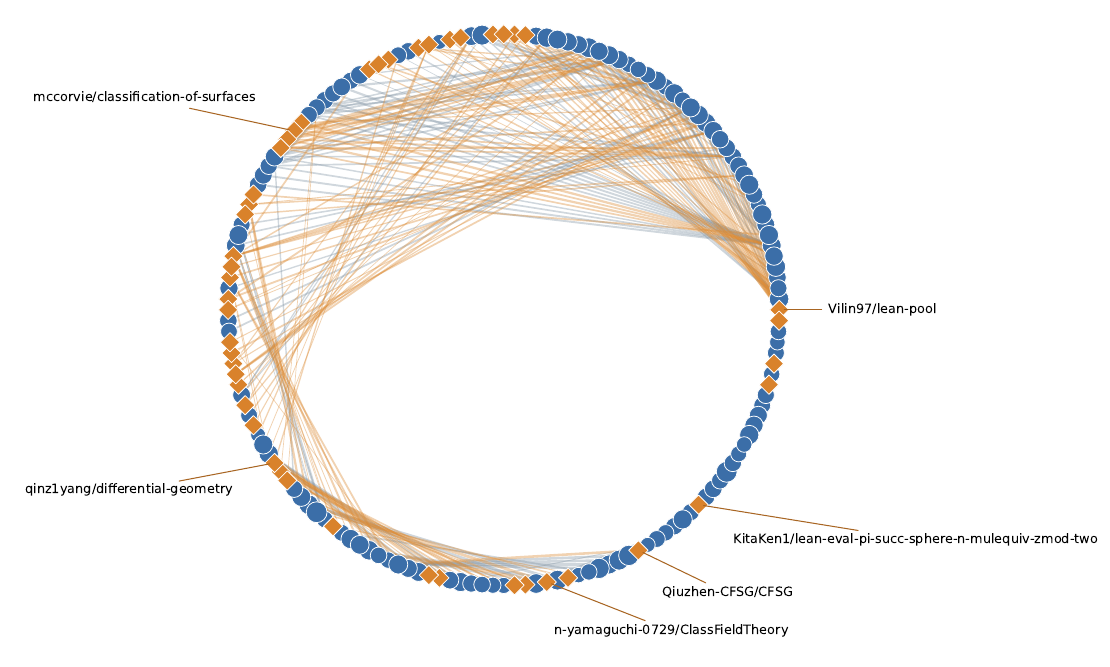
A structural audit of 248 AI-generated LeanEval solutions spanning 19.4 million lines of Lean code, examining proof style, dependency structure, documentation, code reuse, and compilation efficiency beyond kernel correctness.
VeriCodeGen
A structural audit of 248 AI-generated LeanEval solutions spanning 19.4 million lines of Lean code, examining proof style, dependency structure, documentation, code reuse, and compilation efficiency beyond kernel correctness. -
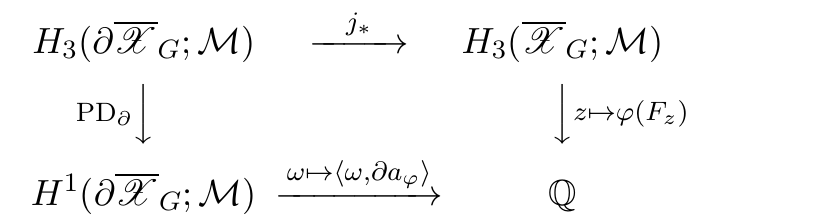 arXiv preprint, 2026A proof of the Bachmann–van Ittersum conjecture and a classification of its polynomial solutions through period polynomials and cusp forms. The main theorems and essential argument are formalized in Lean 4 by AxiomProver.
 -
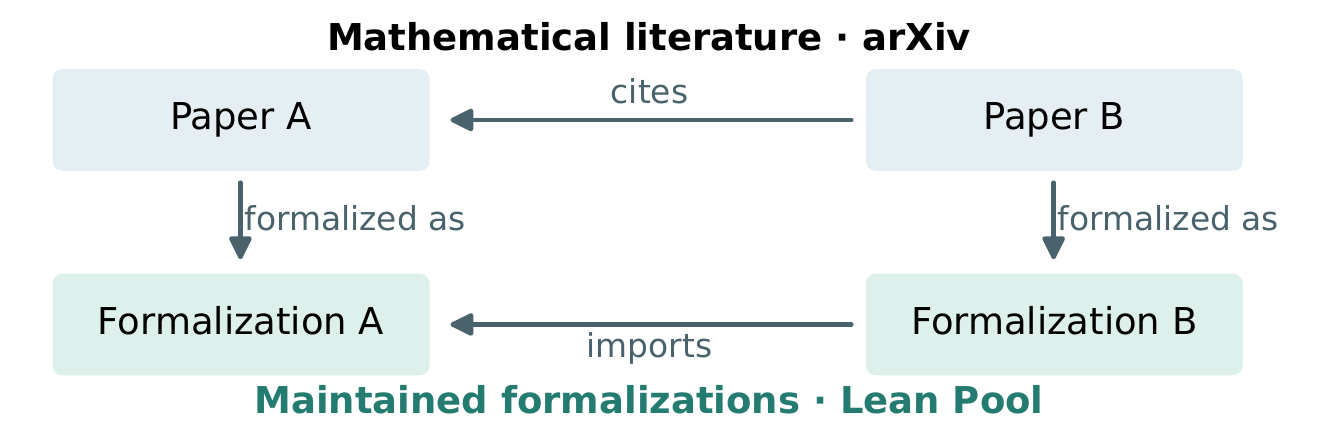 arXiv preprint, 2026An archive of formalized mathematics grown, maintained, and optimized by AI agents, preserving substantial Lean formalizations and making them available for reuse.
 -
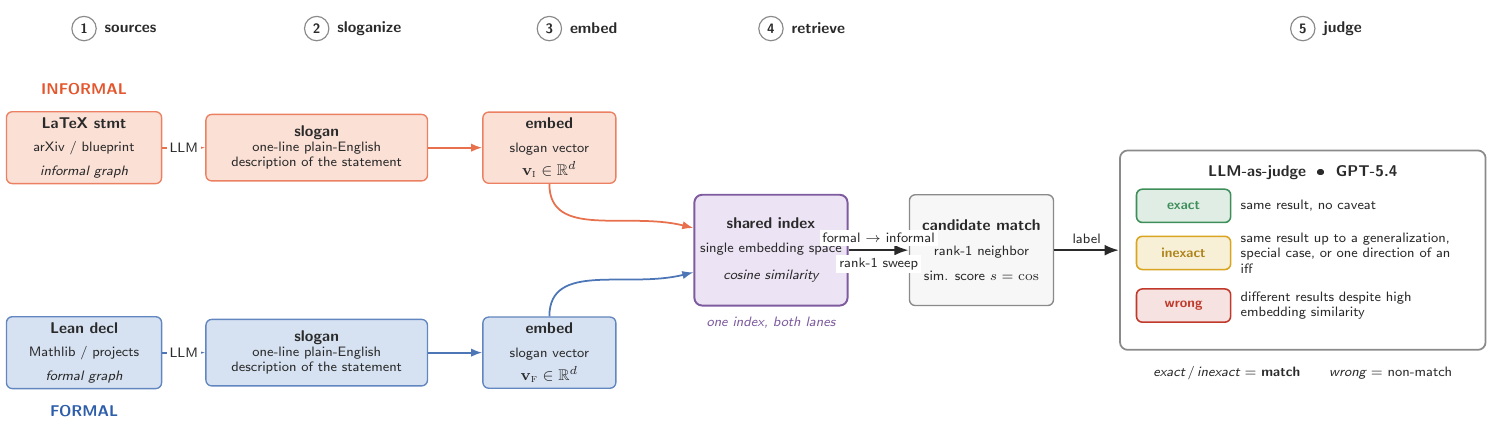 arXiv preprint, 2026A statement-level dependency graph connecting 11.7 million theorem-like environments from arXiv with 388,105 Lean declarations across 25 projects, bridging formal and informal mathematics for search and retrieval.
 -
 AIPV
A complete AI-assisted Lean 4 formalization of the Vlasov–Maxwell–Landau equilibrium characterization, supervised by one mathematician over ten days, with public prompts and development history.
AIPV
A complete AI-assisted Lean 4 formalization of the Vlasov–Maxwell–Landau equilibrium characterization, supervised by one mathematician over ten days, with public prompts and development history. -
 NeurIPS
 2026, Evaluations & Datasets Track (accepted)A large-scale semantic search system over 9.2 million theorem statements extracted from arXiv and seven other sources, the largest publicly available collection of research-level theorems.
NeurIPS
NeurIPS 2026, Evaluations & Datasets Track (accepted)A large-scale semantic search system over 9.2 million theorem statements extracted from arXiv and seven other sources, the largest publicly available collection of research-level theorems. -
 ICLR
ICLR 2026 WorkshopA dataset of 260,000 supervised tuples pairing proof failures with compiler diagnostics, and a fine-tuned 4B-parameter model that surpasses existing approaches in single-shot Lean proof repair.
ICLR
ICLR 2026 WorkshopA dataset of 260,000 supervised tuples pairing proof failures with compiler diagnostics, and a fine-tuned 4B-parameter model that surpasses existing approaches in single-shot Lean proof repair. -
 ICLR
ICLR 2026 Workshop on AI and Partial Differential EquationsA neural network method for deterministic simulation of collisional plasma, inspired by score-based generative modeling.
ICLR
ICLR 2026 Workshop on AI and Partial Differential EquationsA neural network method for deterministic simulation of collisional plasma, inspired by score-based generative modeling. -
 ICML
ICML 2026 OralAn equivariant Transformer that maps i.i.d. samples to both density values and score vectors, generalizing across distributions and sample sizes, with a principled connection to kernel density estimation.
ICML
ICML 2026 OralAn equivariant Transformer that maps i.i.d. samples to both density values and score vectors, generalizing across distributions and sample sizes, with a principled connection to kernel density estimation. -
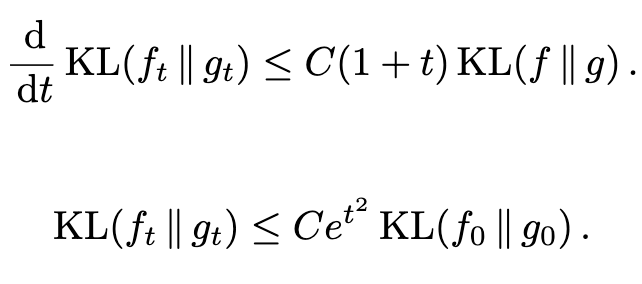 Quantitative stability estimate of the Landau equation in relative entropy, and an application to error analysis of score-based particle methods for simulating plasma.
 -
 CPAA
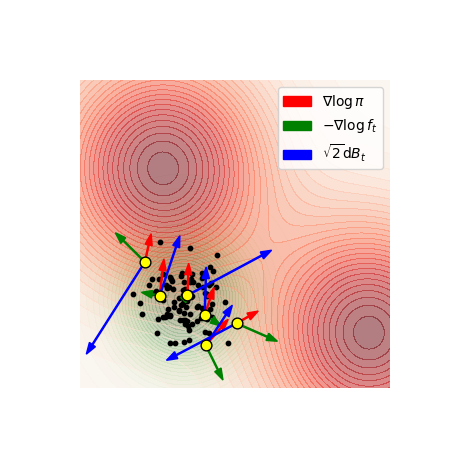
Communications on Pure and Applied Analysis, 2026Deterministic sampling of an unnormalized density using on-the-fly score estimation.
CPAA
Communications on Pure and Applied Analysis, 2026Deterministic sampling of an unnormalized density using on-the-fly score estimation. -
 CVPR
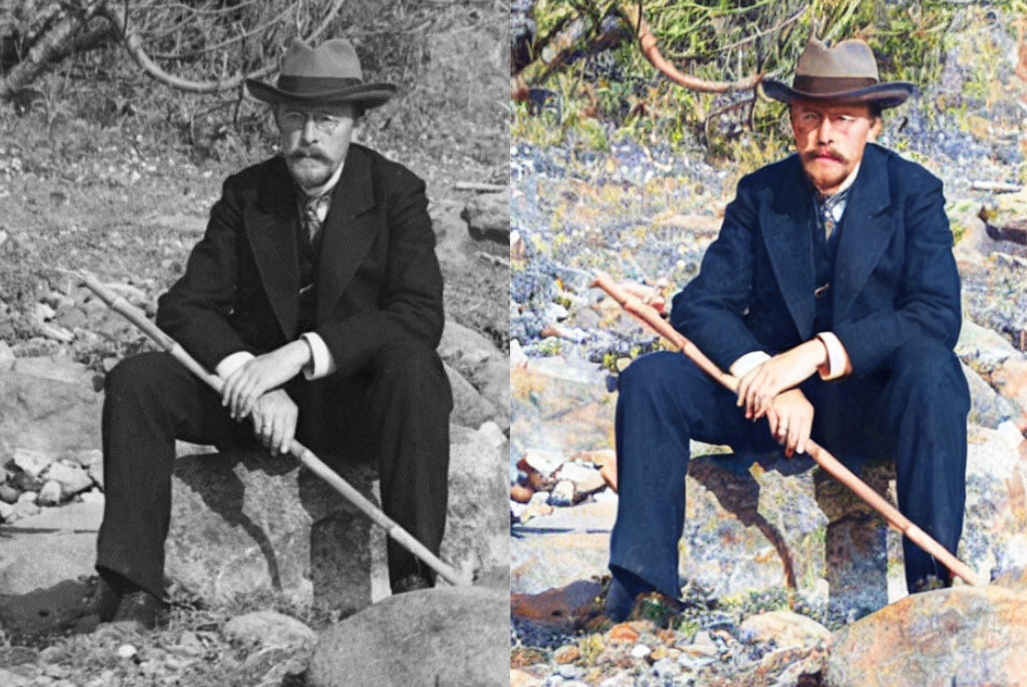
CVPR, 2025A dataset and a diffusion generative model to perform edits from a prompt. The first global edit model trained on real data.
CVPR
CVPR, 2025A dataset and a diffusion generative model to perform edits from a prompt. The first global edit model trained on real data. -
CMS
Communications in Mathematical Sciences, 2025.An algorithm for simulation of plasma using a neural network, inspired by score-based generative modeling.
-
 JCon
JuliaCon, 2023.An algorithm to efficiently simulate any point process on the real line with a continuous intensity rate.
JCon
JuliaCon, 2023.An algorithm to efficiently simulate any point process on the real line with a continuous intensity rate. -
 PLOS
PLOS Computational Biology, 2023Julia library for modeling and high-performance simulation of chemical reaction networks.
PLOS
PLOS Computational Biology, 2023Julia library for modeling and high-performance simulation of chemical reaction networks.
Selected Talks
-
 JMM
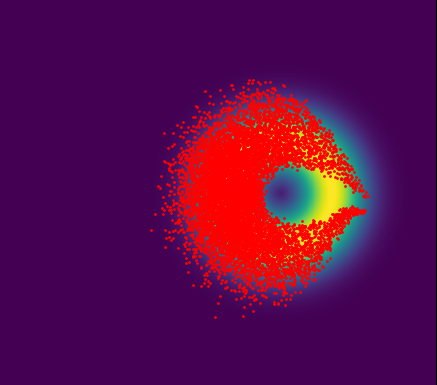
Joint Mathematics Meetings, 2025An algorithm for deterministic sampling by integrating the Fokker-Planck equation using particles.
JMM
Joint Mathematics Meetings, 2025An algorithm for deterministic sampling by integrating the Fokker-Planck equation using particles. -
 JMM
Joint Mathematics Meetings, 2025Lessons learned in building community and mentoring undergraduate research projects in Lean.
JMM
Joint Mathematics Meetings, 2025Lessons learned in building community and mentoring undergraduate research projects in Lean. -
 UW Math AI seminarAn SDE-first introduction to diffusion generative modeling.
Work Experience
- [Current] Member of Technical Staff at Axiom Math, Palo Alto, California — large-scale autoformalization of mathematics.
- [2025] AI Intern at Google Cloud - Improved a Slides2Video model with a multi-agentic APO algorithm. Achieved F1 score of 0.9. Collaborated with Google DeepMind.
- [2024] ML Intern at Google Cloud (Python, SQL) - Trained XGBoost to predict defective TPUs from telemetry, achieved 80% accuracy and improved test efficiency 4x.
- [2023] ML Intern at YouTube (Python, C++, SQL) - Trained ML models to enhance cache efficiency achieving 2x Egress/Ingress improvement. Implemented better load balancing based on two random choices model.
- [2022] Data Engineering Intern at Google (FlumeJava, SQL) - Built distributed pipeline for Nearby Share. Reduced dashboard loading from 30s to 1s using approximate aggregation.
- [2021] Google Summer of Code (Julia) - Implemented and optimized jump process simulation algorithms, improving runtime by 70% (blog post).
Academic Service
Reviewing
- International Conference on Machine Learning (ICML) 2026
- LLM Logical Reasoning Workshop @ ICLR 2026
- Geometry-grounded Representation Learning and Generative Modeling (GRaM) @ ICLR 2026
- AI+PDE Workshop @ ICLR 2026
- The 2nd AI for Math Workshop @ ICML 2025
- Communications on Pure and Applied Analysis (journal)
Teaching Volunteering
- Experimental Lean Lab 2021-present
- Directed Reading Program 2021
- UW Math Circle 2020-2021
Organizing
- Math AI Lab (Director) 2022-present
- Math AI Seminar 2024-present
Open Source Software
- JumpProcesses.jl 2019-2023
- Mathlib4 2024-present
- CayleyPy 2026-present
Teaching
Instructor
- Introduction to Mathematical Formalization, 2024 - New class at the University of Washington, teaching mathematics students to use formalize theorems in Lean.
Teaching Assistant
- Introduction to Mathematical Formalization, 2025
- Linear Algebra, 2023-2024
- Discrete Mathematical Modeling, 2023
- Calculus, 2020-2022
- Data Science, 2020
Projects
- [2025] University course collector (Data scraping, Gemini API, Serper API) - Scraped a dataset of 100,000 university courses from Russian universities, to be used by the Urait educational platform.
- [2025] Climb Genie (Data scraping, SQL) - Made a bi-gram climbing route generator for the Kilter board.
- [2024] Conditional Score-based generative modeling (PyTorch) - Implemented conditional score-based generative modeling on MNIST from scratch.
- [2024] Formalizing Central Limit Theorem (Lean4) - Formalized several lemmas on the way to the full CLT formalization, pushed them upstream to mathlib4.
- [2024] AI DnD Bot (OpenAI API, PostgreSQL) - Telegram bot for Dungeons & Dragons with long- and short-term memory and image generation features.
- [2024] Mean-field limit of a ResNet (PDE, gradient flows) - Infinite-width limit of a ResNet trained with gradient descent is a Wasserstein gradient flow ( slides ).
- [2024] Stein Variational Gradient Descent (Jax) - Analyzed SVGD algorithm for deterministic sampling (report).
- [2022] Deep Reinforcement Learning in DeepRacer (Python) - Placed in top 3% out of 1000+ participants in AWS virtual race (video, report).
- [2020] Cartier Duals (Homological Algebra) - Several examples of Cartier duals.
- [2020] Fully Dynamic Connectivity (Python) - Benchmarked graph connectivity data structure, exponentially faster than DFS (report).
- [2020] Object-Oriented Projects (Java) - Built a Quest game (CLI, 3k LOC) and Bank terminal (GUI, data persistence, 11k LOC) with the best OOD practices.
- [2020] Dense Low Rank Subgraph (Julia) - Introduced a novel combinatorics problem, proved it is polynomial-time solvable, and developed algorithms (report).
- [2019] Data Mining Competition (Python) - Placed second in class of 100+ graduate students in the competition of predicting citation links between publications in DBLP.
- [2019] Stochastic Simulation Algorithms (Julia) - Implemented and compared numerical methods for chemical stochastic systems.
- [2019] Mini Language (Haskell) - Created an imperative language in Haskell and solved five Project Euler problems.
- [2018] Behavioral Economics Research - Researched intuitive belief propagation.
Powered by Jekyll and Minimal Light theme.